
Our Specialty. Installed by Roofers.
Solar Attic Fan Installation in Houston
Your attic traps heat all summer long. A solar attic fan helps move that hot air out and lets your attic breathe. We install them across Houston and surrounding areas, and we seal every fan the way a roofer should. Free estimates, always.
What's Really Happening Above Your Ceiling
Your roof soaks up sunlight all day. That heat passes into the attic and has nowhere to go. Without good airflow, it just sits there and builds.
By late afternoon your attic can be far hotter than the air outside. And it stays hot long after the sun goes down, because there's nothing moving that air out.
Houston makes it worse. Long summers, high humidity, and plenty of direct sun. That combination means attic heat and attic moisture both become a problem here.
You usually notice it in small ways first. The upstairs feels warmer than the downstairs. The AC seems to run nonstop. Or the attic feels like a wall of heat the second you open the hatch.
A Simple Fix for a Stuffy Attic
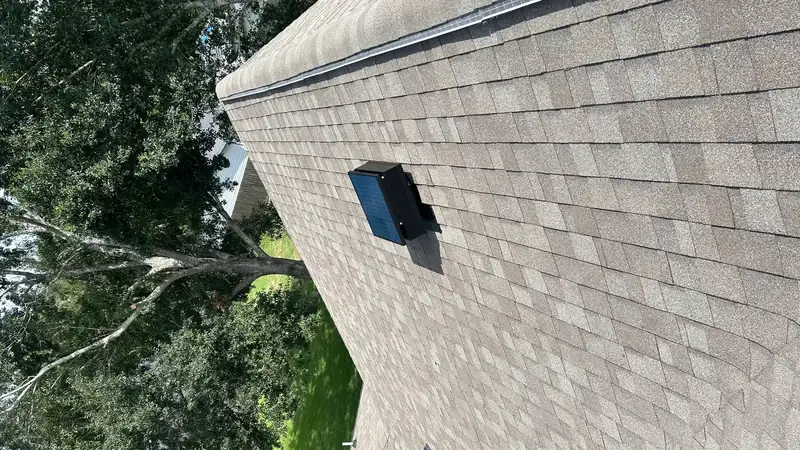
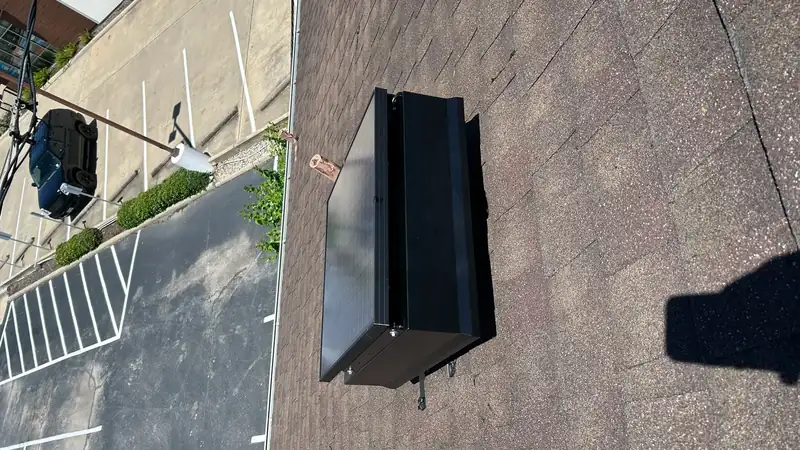
A solar attic fan mounts on your roof and pulls hot air out of the attic. As that air leaves, fresh air gets drawn in through your soffit and intake vents. The result is steady movement instead of trapped, stagnant air.
That's really the whole idea. Give the heat somewhere to go.
It also helps with moisture. Damp air that sits in an attic isn't good for anything up there. Better airflow helps keep that air moving instead of settling.
Powered by the Sun, Not Your Breaker Box
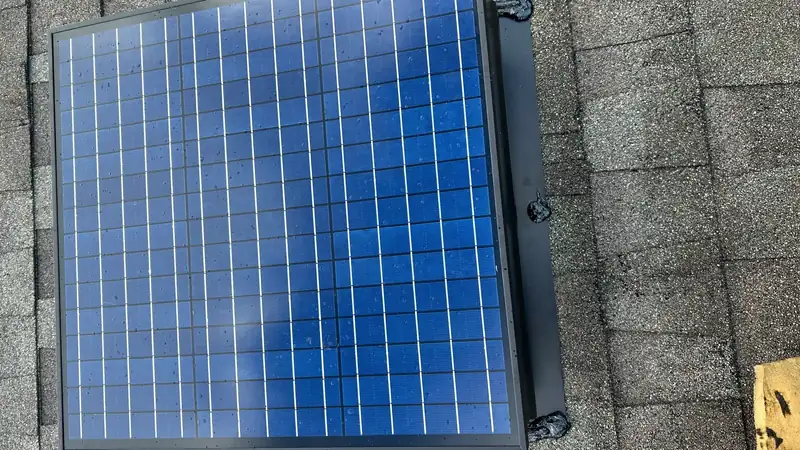
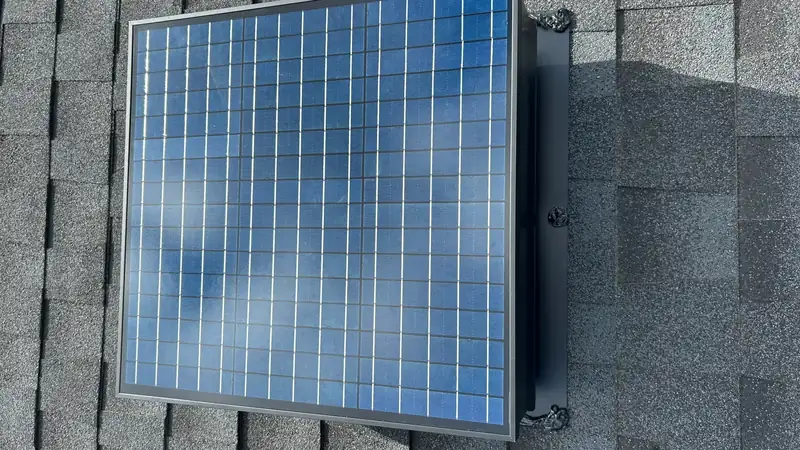
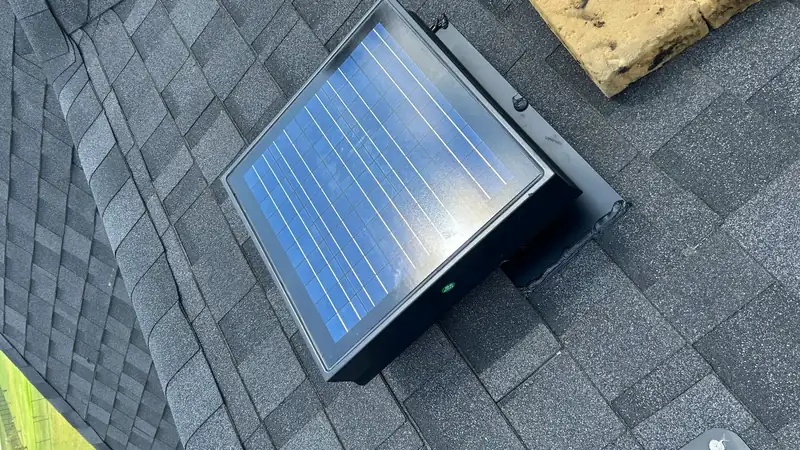
A solar panel sits right on top of the unit. Sunlight hits the panel, the panel powers the motor, and the fan spins. That's it.
There's no wiring into your electrical panel. No new circuit. No added draw on your power bill from running the fan.
The nice part is the timing. The fan works hardest on bright, sunny days, which is exactly when your attic is at its worst. When the sun fades, the fan slows down. It matches the problem on its own.
What Better Attic Airflow Can Do
- Helps remove trapped hot air from your attic
- Improves attic ventilation and overall air movement
- Helps manage excess attic moisture
- Runs on solar power, so it adds nothing to your electric use
- No wiring or electrical work needed
- Operates quietly on your roof, day after day
We'll be straight with you. We don't promise a specific drop in your electric bill or an exact temperature number. Every home is different. What we can tell you is that a properly sized fan, installed and sealed correctly, moves hot air out of your attic. That's what it's built to do.
Four Sizes. One That Fits Your Home.
We install solar attic fans in four sizes.
25W
Smaller attics and tighter spaces
30W
A common fit for many Houston homes
40W
Larger attic areas or homes needing more airflow
70W
Big attics and homes where one strong unit does the work
Bigger isn't automatically better. The right size depends on how much attic space you have, how your home is laid out, and what kind of intake ventilation already exists up there.
That last part matters more than most homeowners realize. A fan pulls air out, but air also has to come in. If your intake vents can't keep up, an oversized fan doesn't help you.
So we look first. We check your attic, look at your existing ventilation, and recommend a size that makes sense for your house. Not the biggest one we can sell you.
Schedule a Free Inspection
We'll check your attic and your existing ventilation before we recommend anything.
The Part Most People Don't Think About
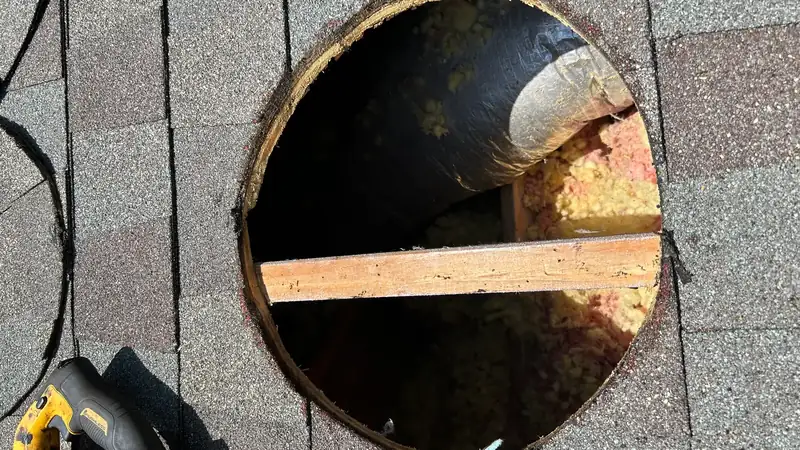
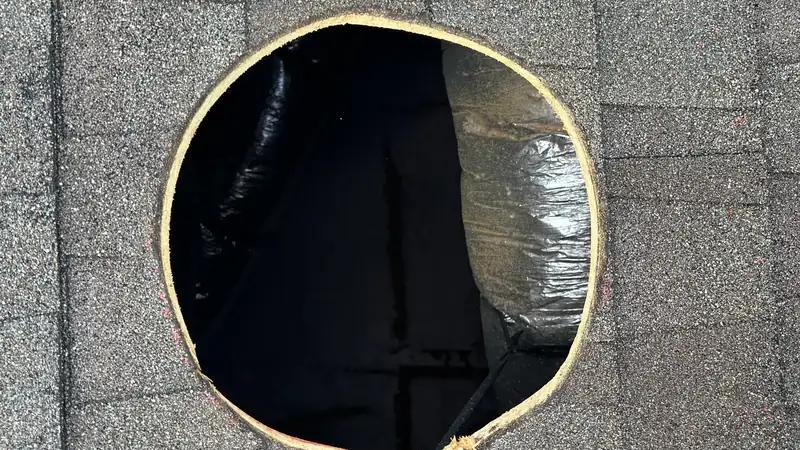
Installing a solar attic fan means cutting a hole in your roof.
That's worth sitting with for a second. A brand new opening, in the surface that keeps water out of your house. Done right, you'll never think about it again. Done wrong, you've traded an attic problem for a leak.
Here's how we handle it.
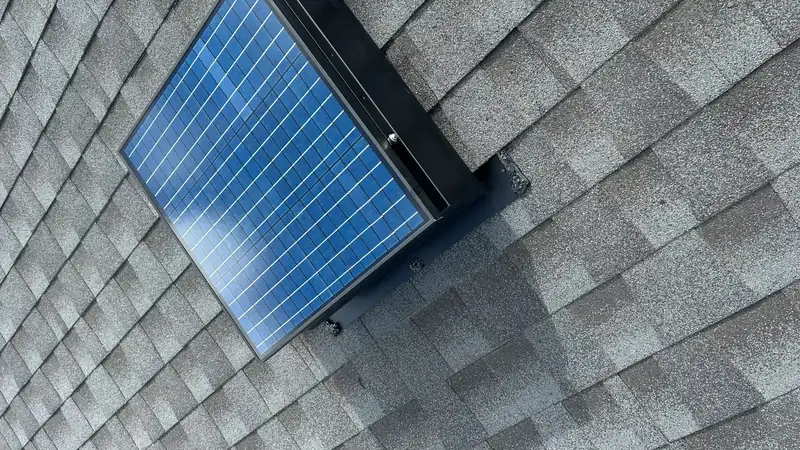
We pick the placement based on your roof and your attic layout, not just wherever's easiest to reach. We cut clean. We flash and seal the unit properly so water sheds around it the way it should. Then we check the surrounding shingles and flashing before we call it done.
We also make sure the fan is actually doing its job once it's running.
How the Install Goes
We're Roofers First
Plenty of people can mount a fan. Fewer know what happens to a roof when you open it up.
Our owner started as a roofer helper and spent more than 10 years working his way up in the roofing trade. Leaks, flashing, storm damage, penetrations. He's repaired all of it.
That background changes how we approach an attic fan install. We're thinking about water the whole time. Where it runs, where it pools, and how this new opening fits into everything around it.
If you've ever had a contractor cut into your roof and leave you with a slow drip six months later, you already know why this matters.
Covered Two Ways
Lifetime product warranty.
The fan itself is covered by a lifetime product warranty.
2-year labor warranty.
Our installation work is covered for two years.
If something isn't right with the install, call us. We'll come back out.

Learn more about our fans
A lifetime product warranty on the fan and a 2-year labor warranty on our installation.
If something isn't right with the install, call us. We'll come back out.
FAQ
Recent Installs
Let's Take a Look at Your Attic
We'll come out, check your attic and your current ventilation, and tell you what we'd recommend. If you don't need a fan, we'll say so.
Estimates and inspections are free.
Monday through Saturday, 8 AM to 5 PM